
Marketing a hospital is not marketing a clinic at a larger scale. A single doctor sells trust in one person. A hospital sells trust in a system: many specialties, many doctors, emergency readiness, and a brand patients are asked to rely on at their worst moments. This guide covers how we approach hospital marketing in India, drawn from work with 100+ healthcare brands.
Start with how patients actually decide
Hospital decisions usually split into two kinds. Planned care, such as a knee replacement, a maternity booking or a cardiac check-up, involves weeks of research, comparison and family discussion. Emergency care is decided in minutes, by proximity and reputation. Your marketing should serve both, but with different tools: content and reviews for planned care, local visibility and clear emergency contact details for urgent care.
Build the foundation before spending on ads
Most hospital websites lose patients before any campaign starts. Check four things first:
- Specialty pages: one strong page per specialty and per major procedure, written for patients, with the treating doctors, facilities and a clear appointment path.
- Doctor profiles: qualifications, registration numbers, experience and areas of focus. Patients often search the doctor’s name, not the hospital’s.
- Speed and mobile: most hospital searches happen on phones, often on slow connections.
- One contact path: a visible phone number, a WhatsApp link and an appointment form on every page.
Local search carries most of the weight
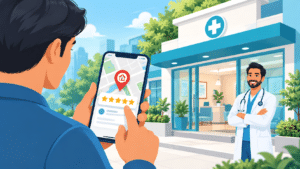
For a hospital, a complete and well-reviewed Google Business Profile is often the highest-return asset you own. Maintain it per location, keep timings, services and photos current, and answer reviews promptly. Our guides on local SEO and Google reviews apply directly, with one addition: a hospital needs a review process that covers departments, not only individual doctors.
Content by specialty, not by campaign
Publish helpful, accurate articles for each department: what a procedure involves, recovery, cost ranges where you can state them responsibly, and when to seek care. Have a consultant review each piece. This builds the kind of authority that search engines and patients both reward, and it is the safest advertising format under Indian rules.
Paid campaigns that respect the rules
Google Ads and Meta Ads can fill health-check packages, maternity tours and elective procedure consultations. They work best with a dedicated landing page per service and call tracking, so you know which campaigns produce real appointments. Keep claims modest. The NMC advertising guidelines and the Drugs and Magic Remedies Act restrict testimonials, guaranteed outcomes and superlatives, and hospital ads are watched closely.
Use social media for reassurance
Hospital social media works best as a quiet trust-builder: doctor introductions, patient education, awareness days and behind-the-scenes looks at facilities. Our social media guide sets out what to post and what to avoid.
Measure the journey, not the clicks
Track calls, WhatsApp enquiries, appointment requests and, most importantly, booked and completed appointments by source. Ask the front desk and call centre to record how every new patient found you. Without that, marketing reports become a list of impressions.
Where to begin
If you manage marketing for a hospital or a multi-specialty centre, start with the website and Google Business Profile, then add content and paid campaigns as the foundation proves itself. For a broader view, read our digital marketing guide for doctors. To talk through your hospital’s plan, book a Discovery Session or call 8100550550.